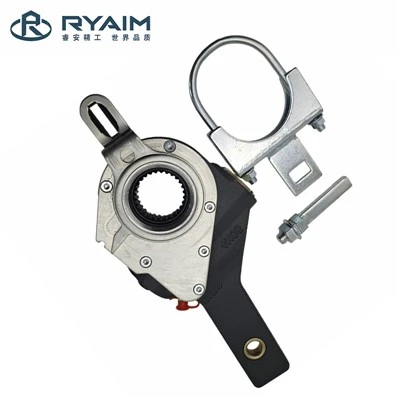
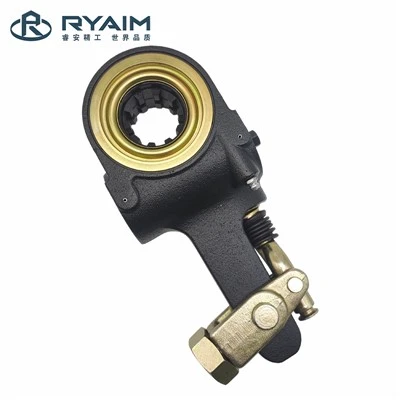
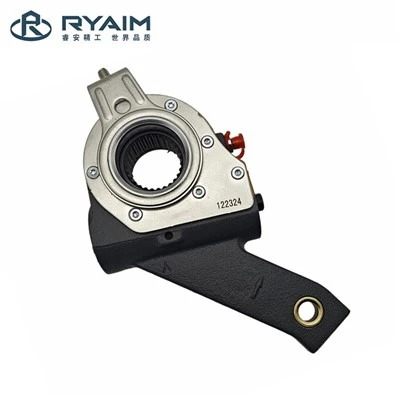
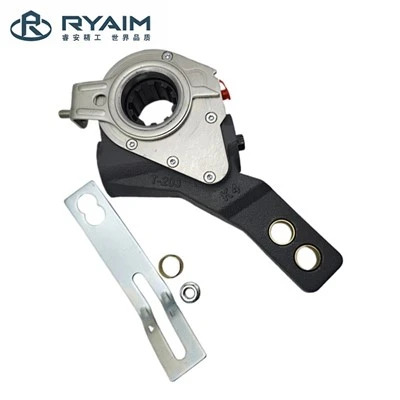
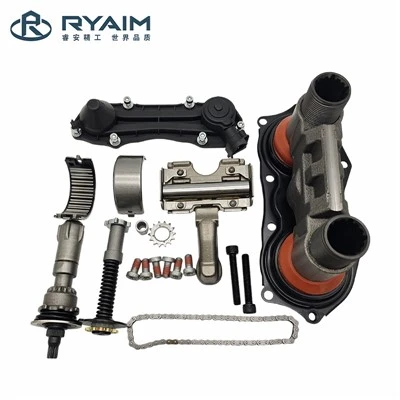
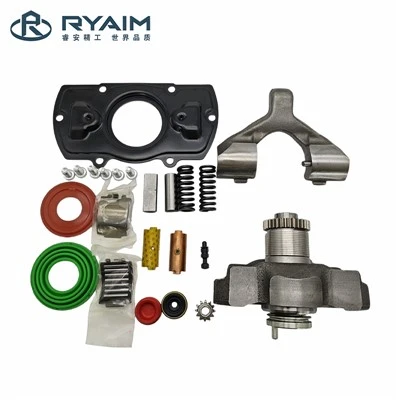
In the trucking industry, a striking phenomenon is quietly unfolding. Although national regulations explicitly mandate that new vehicles be equipped with automatic brake slack adjusters-devices designed to enhance driving safety and prevent brake failure-surprisingly, the first action many seasoned veteran drivers take after taking delivery of a new truck is to surreptitiously remove this safety device, which costs several hundred yuan, and replace it with a manual adjuster costing only a few tens of yuan.
The Original Intent Behind Automatic Slack Adjusters
When discussing the original intent behind automatic brake slack adjusters, the underlying design philosophy is truly excellent. In traditional drum brake systems, as the brake linings gradually wear down, the clearance between the brake drum and the brake shoes inevitably increases. This increased clearance leads to a longer brake pedal travel, sluggish response, and potentially compromised braking performance. In the past, drivers had to regularly crawl under their vehicles to manually turn adjustment screws-relying solely on their experience and tactile feel-in an attempt to set the optimal clearance. However, this manual adjustment process often required a delicate balancing act between preventing brake overheating and ensuring effective braking-a task that was highly dependent on individual intuition and proved quite difficult. The automatic brake slack adjuster-a seemingly high-tech component-effectively acts as an "intelligent mechanic." Utilizing a precise one-way clutch mechanism, it automatically monitors the brake clearance every time the brakes are applied. Should it detect that the clearance has become excessive, it automatically pushes the brake shoes inward as the brakes disengage, thereby ensuring that the braking system remains in an optimal state of responsiveness at all times.
Problems and Causes Associated with Automatic Slack Adjusters
However, reality often falls short of these ideals. Due to issues with product quality or operation in harsh environmental conditions, automatic slack adjusters can sometimes suffer from "misjudgment." This is particularly true within China's complex transportation landscape, where vehicle undercarriages are frequently exposed to and eroded by mud, sand, and moisture. In many vehicles, the pins within the brake wheel cylinders lack adequate lubrication, or the return springs gradually lose their tension; consequently, when the brakes are released, the wheel cylinders fail to fully retract or do so too slowly. Under these circumstances, the automatic slack adjuster may "misinterpret" the extended brake travel-which is actually caused by the sluggish retraction of the wheel cylinders-as an indication of excessive clearance resulting from brake lining wear. This misinterpretation leads the adjuster to over-tighten the brake clearance, potentially triggering severe consequences such as brake drag or complete brake lock-up.
The Practical Choice: Manual Slack Adjusters
Consequently-even if the brake linings themselves are not actually worn-an automatic slack adjuster may press the brake pads tightly against the brake drum, triggering the phenomenon known as "brake drag." During operation, the brakes remain under constant tension; the resulting friction generates heat, and these high temperatures can ultimately lead to brake failure-or, in severe cases, even ignite the tires. This is the dreaded "automatic adjuster burnout" phenomenon that veteran drivers are so wary of. Of course, it would be unfair to attribute the entire problem solely to the automatic slack adjuster itself. In regions with excellent road conditions, clean undercarriages, and rigorous maintenance standards-such as Europe and North America-automatic slack adjusters perform admirably. However, in China, the undercarriage maintenance philosophy among many truck drivers remains stuck in the mindset of "as long as it moves, it's good enough." Automatic slack adjusters contain intricate internal gear mechanisms that demand a very high level of lubrication. Prolonged lack of lubrication, or damage to the protective seals that allows dirt and grit to infiltrate, can cause the internal components to seize up-leading to issues ranging from the adjuster becoming "locked tight" to suffering "total failure."
The Ideal Operating Environment
It is particularly worth noting that if the product itself suffers from inherent quality defects, it can trigger a vicious cycle: the harsher the operating environment, the more prone the components are to seizing; once components seize, the automatic adjuster may begin to make erroneous adjustments; and as these miscalculations accumulate, the risk of an accident inevitably escalates. Conversely, in environments characterized by good road conditions and rigorous maintenance practices, automatic slack adjusters perform exceptionally well, significantly reducing the operational headaches experienced by drivers.
Real-World Issues and Challenges
For drivers who frequently operate in construction zones or heavy-haul environments-and whose maintenance practices may be less than rigorous-opting to revert to manual slack adjusters may be the most sensible choice. While this decision may stem from a sense of resignation, it ultimately reflects a pragmatic wisdom essential for survival in their specific operating reality.
The Impact of Product Quality
Naturally, if one's budget permits, investing in top-tier, premium-quality products will undoubtedly yield a vastly different-and superior-user experience. High-quality components-such as BPW axles-demonstrate excellent adaptability across various conditions; conversely, the uneven quality of many aftermarket products currently available on the market contributes to an increased risk of accidents involving automatic slack adjusters.
Summary and Recommendations
Automatic slack adjusters are undoubtedly an effective piece of equipment, yet their successful application is not without prerequisites. For drivers who primarily operate on highways and adhere to a regular schedule of undercarriage greasing and maintenance, automatic slack adjusters can serve as invaluable guardians of safety, sparing them the inconvenience of having to crawl beneath their vehicles to perform manual adjustments. ◇ Recommendations for the Use of Automatic Slack Adjusters
However, for drivers who frequently operate under harsh conditions and face inadequate maintenance support, opting to revert to manual slack adjusters-while a reluctant choice-reflects a pragmatic wisdom born of real-world survival.