Have you ever wondered-as you drive to and from get off work every day, stepping on the brake pedal while waiting at an intersection-what exactly is helping you bring that two-ton hunk of metal to a steady halt?
You might find it hard to believe, but the key player in this scenario is actually a rather unassuming-looking metal component: the brake caliper.
What Exactly Is a Brake Caliper? First, Let's Clarify Its "Identity"
To discuss brake calipers, we must first start with the braking system as a whole.
Imagine this: how do you brake when riding a bicycle? You squeeze the brake levers, and two rubber pads clamp down on the wheel rims, relying on friction to bring the bike to a stop. An automobile's disc brake system operates on essentially the same principle-it is simply scaled up dozens of times in size and refined to a level of precision hundreds of times greater.
In this system, the brake disc (or rotor) corresponds to the bicycle's wheel rim, and the brake pads correspond to those two rubber blocks; the brake caliper, then, acts as the "hand"-responsible for pressing the brake pads firmly against the brake disc.
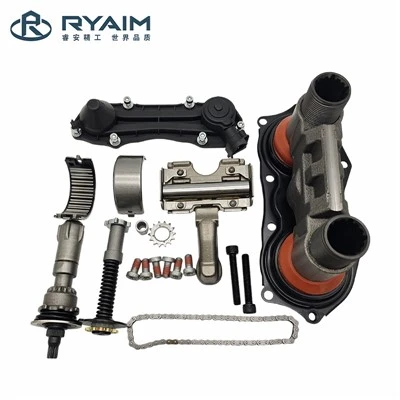
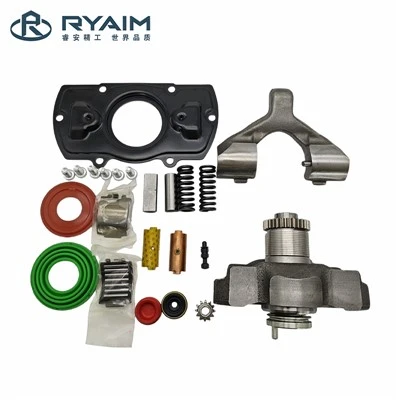
Structurally, a brake caliper is a metal housing-typically made of cast iron or aluminum alloy-containing pistons and seals. When you depress the brake pedal, hydraulic fluid transmits pressure through the brake lines, driving the pistons inside the caliper outward. These pistons, in turn, push the brake pads against the brake disc-executing the entire process in one seamless, fluid motion.
Sounds simple? In reality, the technical sophistication involved is immense.
Just think about it: an average family car typically weighs over 1.5 tons. When traveling at a speed of 120 kilometers per hour, the kinetic energy it possesses is staggering. To bring such a vehicle to a complete stop within a mere few dozen meters, the brake caliper must withstand extreme levels of pressure and heat. During emergency braking in high-performance vehicles, the temperature of the brake discs can skyrocket to 600 or 700 degrees Celsius-and the calipers get "baked" right along with them. To maintain precise actuation and consistent performance under such grueling conditions requires a truly formidable level of engineering prowess.
The Core Function of the Brake Caliper: It's Far More Than Just "Clamping the Pads"
Many people assume that a brake caliper is merely a "clamp"-something that simply squeezes the brake pads and calls it a day. While that understanding is partially correct, it is far from comprehensive.
1. Transmitting and Amplifying Braking Force-You Apply the Pressure, It Does the "Heavy Lifting"
The force you apply when stepping on the brake pedal is actually quite modest-at most, a mere 10 to 20 kilograms. However, this amount of force is clearly insufficient to bring a high-speed vehicle to a halt.
This is where the brake calipers step in to play their vital role.
The braking system operates on hydraulic principles. The force you apply to the pedal is first amplified by a vacuum booster; it is then converted into hydraulic pressure by the brake master cylinder and transmitted through the brake lines to the calipers at each of the four wheels. Inside the calipers, pistons are driven by this hydraulic pressure, transferring that force directly to the brake pads.
Here lies a crucial point: hydraulic systems adhere to Pascal's Law, which states that pressure within a confined fluid is equal at all points. Since the surface area of the caliper pistons is significantly larger than that of the master cylinder piston, the output force is multiplied exponentially-in accordance with the formula: Force = Pressure × Area.
To use an analogy: imagine trying to poke through a block of jelly with a drinking straw-it's nearly impossible. But what if you switched to a chopstick? You apply the same amount of physical effort, yet because the contact area has changed, the resulting effect is entirely different. The design of the brake caliper pistons leverages this very principle to amplify braking force.
So, do not underestimate the simple act of stepping on the brake pedal; behind it lies a sophisticated mechanism for the transmission and amplification of force, with the brake caliper serving as a critical link in that chain.
2. Precisely Controlling Brake Pad Position-"Fine-Tuning" Down to the Millimeter
The clearance between the brake pads and the brake discs is typically a mere fraction of a millimeter-usually just a few tenths of a millimeter. If the gap is too narrow, the pads will constantly rub against the discs; aside from wasting fuel, this accelerates wear and tear. Conversely, if the gap is too wide, the braking response becomes sluggish, resulting in longer stopping distances.
One of the primary functions of the brake caliper is to precisely regulate this clearance.
Modern brake calipers feature internal self-adjusting mechanisms. As the brake pads wear down, the piston automatically extends slightly outward to maintain the optimal clearance. Once the brakes are released, the piston retracts to its proper resting position-preventing the pads from dragging against the disc while ensuring the gap does not become excessively wide.
This entire process is achieved through the elastic deformation of the internal seals within the caliper-a truly ingenious piece of engineering design. You may never have noticed it, but it works silently every day, ensuring that every time you step on the brakes, the sensation feels "just right."
3. Withstanding Extreme Heat and Pressure-The "Tough Guy" of the Braking System
As mentioned earlier, during hard braking, the temperature of the brake discs can soar to 600 or 700 degrees Celsius. This heat doesn't simply vanish into thin air; a significant portion of it is transferred directly to the brake calipers.
This places extremely high demands on both the materials and the design of the calipers.
Calipers on standard family cars are typically made of cast iron-a material that is heat-resistant and low-cost, albeit heavy. High-performance vehicles and modified cars, however, tend to favor aluminum alloy calipers; these are lightweight and dissipate heat rapidly, though they come at a higher cost. Racing cars take things to an even greater extreme, utilizing materials such as titanium alloy or even carbon-ceramics-a single set of these calipers can cost as much as an entire family car.
Beyond merely withstanding high temperatures, calipers must also endure immense mechanical stress. With every application of the brakes, the pistons push against the brake pads, and the resulting reaction force bears down entirely upon the caliper housing. Drivers who frequently tackle mountain roads may have experienced this firsthand: during a continuous descent involving repeated braking, the brakes can begin to feel increasingly "soft"-a phenomenon known as brake fade. A well-designed caliper with high heat-dissipation efficiency delays the onset of brake fade-a critical factor that can literally save lives in emergency situations.
4. Working in Tandem with ABS/ESP-The "Executors" of Intelligent Braking
Virtually all modern vehicles come equipped as standard with ABS (Anti-lock Braking System) and ESP (Electronic Stability Program). Yet, no matter how sophisticated these electronic systems may be, they ultimately rely on the brake calipers to "do the heavy lifting."
The operating principle behind ABS is as follows: when the system detects that a specific wheel is on the verge of locking up, it rapidly releases the braking pressure applied to that wheel, then reapplies it. This cycle repeats continuously, maintaining the wheel in a critical state-poised *just* at the threshold of locking up, but never fully locked. This approach ensures maximum braking force while simultaneously preserving the vehicle's steering capability.
During this process, the caliper pistons must repeatedly extend and retract within a fraction of a second-at a frequency that can reach more than a dozen cycles per second. Without calipers that offer sensitive response and precise actuation, the ABS system would be nothing more than a decorative ornament.
The ESP system is even more complex; based on the vehicle's dynamic attitude, it can selectively apply braking force to individual wheels to help correct instances of "fishtailing" (oversteer) or "plowing" (understeer). This capability demands that all four calipers be capable of executing commands independently and with absolute precision. One could say that the calipers represent the "last mile" of these intelligent safety systems.