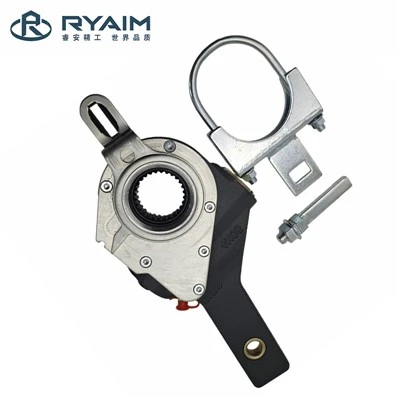
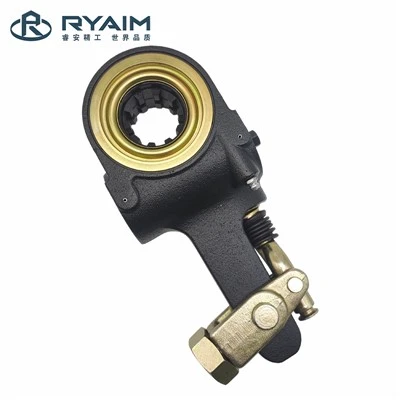
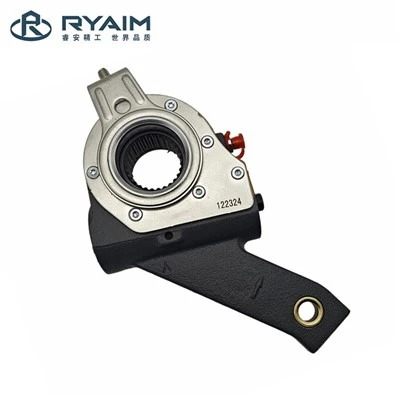
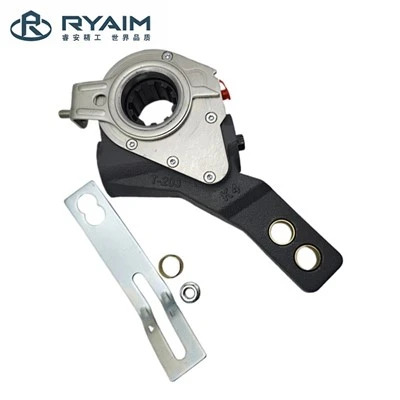
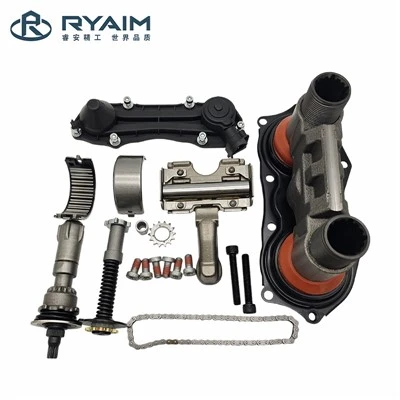
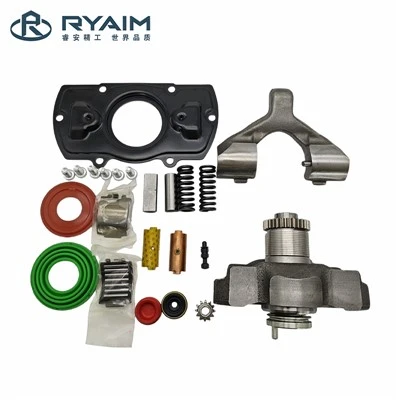
The fundamental differences between automatic slack adjusters and manual slack adjusters center on four key aspects: adjustment method, operational convenience, applicable scenarios, and safety redundancy.
1. Differences in Adjustment Method
- Manual Slack Adjuster: Requires manual rotation of an adjustment screw-typically performed using a wrench or specialized adjustment tool-to correct brake clearance; this process relies entirely on the operational experience of the driver or maintenance personnel.
- Automatic Slack Adjuster: Features built-in mechanical components (such as ratchets and springs) that automatically compensate for increased brake clearance caused by brake lining wear during the brake release cycle, requiring no manual intervention.
2. Differences in Operational Convenience
- Manual Slack Adjuster: Requires the vehicle to be stopped for manual adjustment whenever brake linings are replaced or the braking system is serviced; a single adjustment takes approximately 5–10 minutes, adding to the time required for routine maintenance.
- Automatic Slack Adjuster: Automatically calibrates itself after every braking action during vehicle operation; no additional manual adjustment is required during daily use, aside from periodic checks to ensure the internal mechanical components are functioning correctly.
3. Differences in Applicable Scenarios
- Manual Slack Adjuster: Primarily used in small private vehicles and older commercial vehicles-scenarios where maintenance costs are a critical concern and vehicle usage intensity is relatively low.
- Automatic Slack Adjuster: Widely adopted in vehicles subject to high-intensity, continuous operation-such as heavy-duty trucks, buses, and construction machinery-where they effectively mitigate the risk of brake failure caused by delayed or neglected manual adjustments.
4. Differences in Safety and Maintenance Costs
- Manual Slack Adjuster: If adjustments are delayed or lack precision, excessive brake clearance and increased brake pedal travel may result, thereby heightening the risk of rear-end collisions or total brake failure; furthermore, routine maintenance incurs additional labor costs.
- Automatic Slack Adjuster: Automatically maintains the standard brake clearance, thereby reducing the likelihood of human error during adjustment; however, its internal mechanical structure is relatively complex, resulting in higher replacement costs per unit compared to manual adjusters, and any internal jamming or malfunction can lead directly to abnormal braking performance.