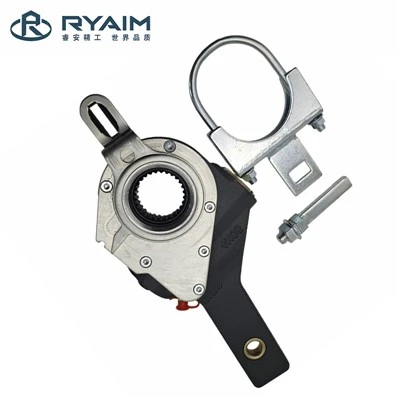
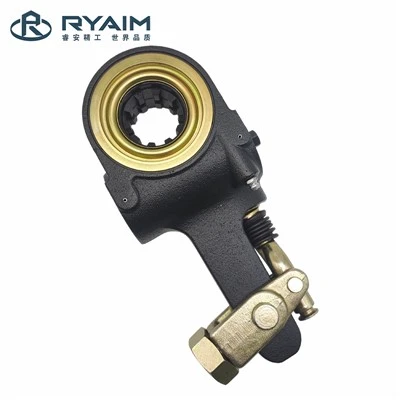
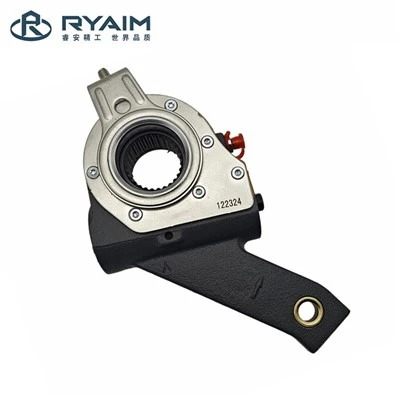
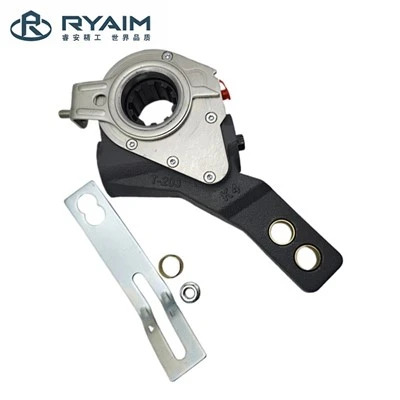
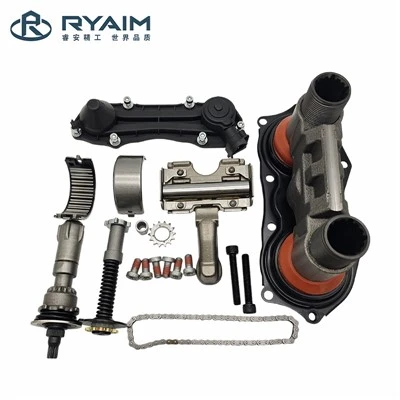
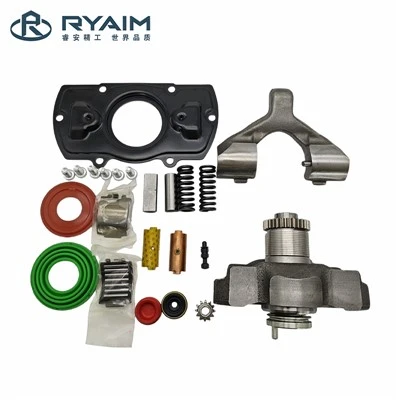
(1) Ensures that the brakes on all wheels maintain a constant and consistent clearance, making the vehicle's braking system more responsive, balanced, and effective, while simultaneously shortening braking distances. This guarantees optimal braking performance even when brake shoe thicknesses or wear levels vary across different wheels-a factor of particular importance when axles are sourced from different manufacturers or when brake components and friction materials differ. In contrast, periodic manual adjustment often results in inconsistent clearances between brakes due to differential wear rates, leading to an uneven distribution of braking force.
(2) Shortens braking response times and reduces compressed air consumption. By eliminating excess clearance, the brake air chambers are able to actuate the brakes within the shortest possible stroke and within their optimal operating range, thereby achieving peak braking efficiency, minimal response times, and reduced air usage.
(3) The adjustment mechanism is fully enclosed within a protective housing, shielding it effectively against moisture, corrosion, and physical impact.
(4) Facilitates easy installation.
(5) Eliminates the need for manual adjustment of brake slack adjusters, thereby reducing maintenance frequency, extending vehicle service intervals, and enhancing overall economic efficiency.
(6) The braking balance achieved through automatic brake clearance adjustment becomes increasingly pronounced as the number of axles on the vehicle increases.