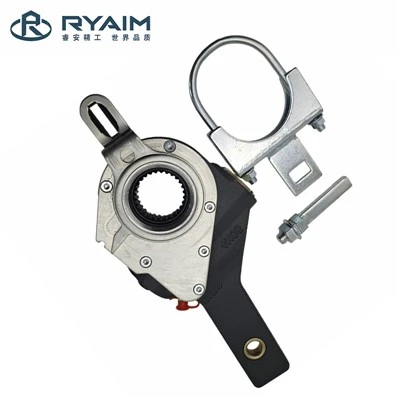
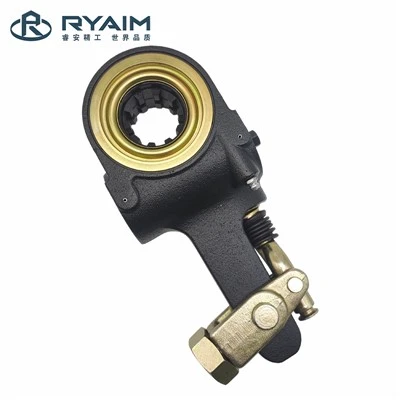
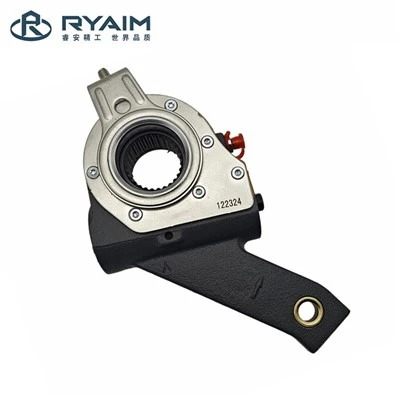
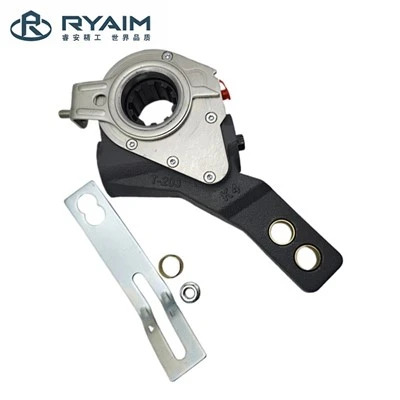
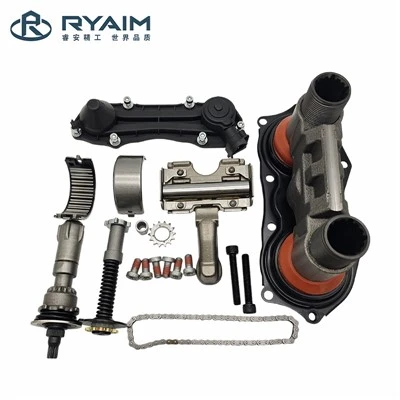
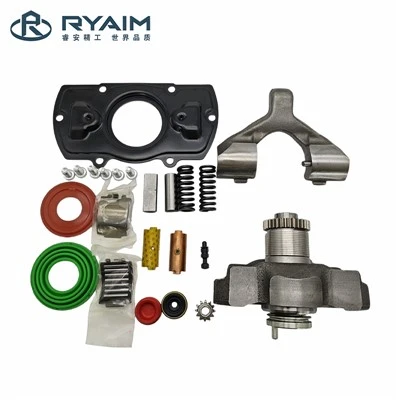
The maintenance costs associated with automatic slack adjusters cannot be simply categorized as high or low; rather, they must be evaluated by taking a comprehensive view of various contributing factors.
Maintenance costs vary depending on the specific type of automatic slack adjuster. American-style adjusters, for instance, feature a design that facilitates easy installation and delivers excellent performance, though their initial cost tends to be relatively high. Conversely, rod-type adjusters boast a compact structure, flexible operation, and safe, reliable performance, all at a lower cost.
Automatic slack adjusters possess numerous inherent advantages: a high degree of automation-eliminating the need for manual adjustment of brake clearance-which saves labor, ensures high precision, and enhances safety. To a significant extent, these attributes contribute to a reduction in overall maintenance costs.
Usage frequency and operating environment exert a substantial influence on maintenance costs. If the equipment is utilized correctly and within a suitable environment, maintenance costs will naturally remain low. For example, in conditions characterized by good road surfaces and normal usage frequency, automatic slack adjusters can operate stably, minimizing the occurrence of malfunctions and thereby lowering maintenance expenses.
Technological maturity is another critical factor. Some automatic slack adjusters utilize less mature technologies or feature complex structural designs, which can increase the difficulty of maintenance and drive up costs. However, as technology continues to advance, automatic slack adjusters will become increasingly optimized, and their associated costs will gradually decline.
Compared to manual slack adjusters, automatic slack adjusters offer distinct advantages such as higher automation levels, labor savings, superior precision, and enhanced safety. Although certain types may entail higher initial costs, in the long run, they improve operational quality and safety while reducing overall lifecycle costs. While manual slack adjusters benefit from lower R&D, production, and maintenance costs-along with strong adaptability and ease of servicing-they generally fall short of automatic slack adjusters in terms of operational efficiency and other performance metrics.
Furthermore, certain automatic slack adjusters feature a compact structure, flexible operation, and safe, reliable performance, in addition to being easy to install. Their adjustment mechanisms are fully enclosed within a housing, protecting them from moisture, dirt, and physical impact; this safeguards braking performance, mitigates potential braking hazards, and ultimately reduces maintenance costs. Moreover, the braking balance achieved through the use of automatic slack adjusters becomes increasingly pronounced as the number of vehicle axles increases.
Automatic slack adjusters excel in ensuring constant wheel brake clearance, rapid and responsive braking, optimal braking torque, and consistent, stable braking performance across the entire vehicle. They also help reduce compressed air consumption, thereby extending the service life of components such as air compressors and brake wheel cylinders, while simultaneously minimizing material wear and extending the operational lifespan of brake components. All these factors indirectly contribute to a reduction in maintenance costs.
In summary, provided that the surrounding conditions and contributing factors are favorable, the maintenance costs associated with automatic slack adjusters can be effectively kept within a reasonable and manageable range.