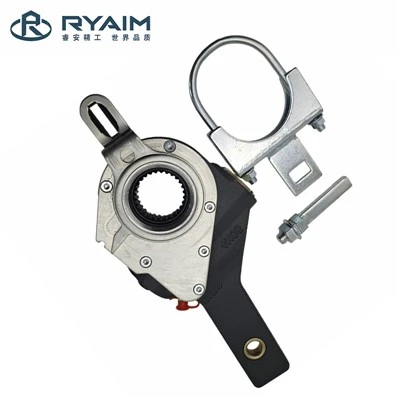
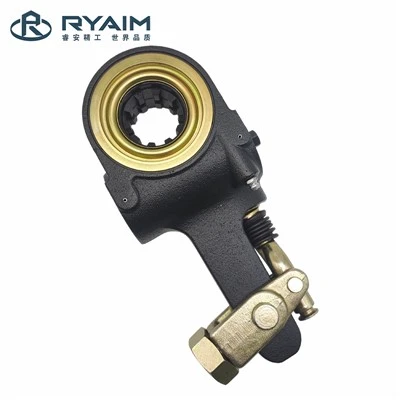
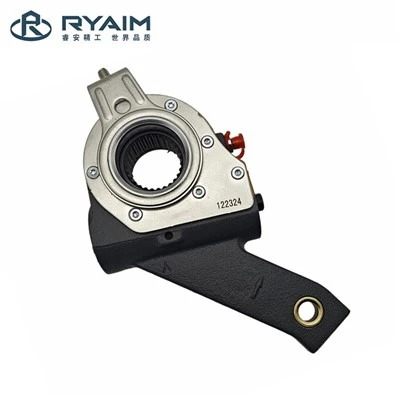
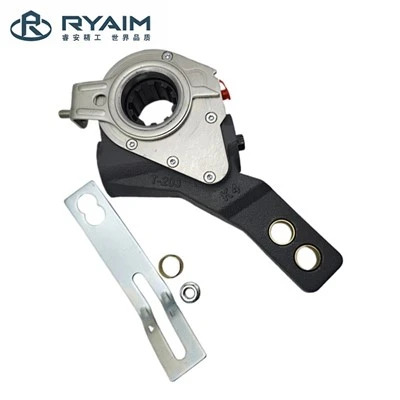
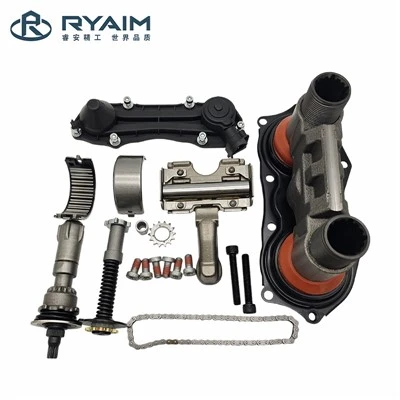
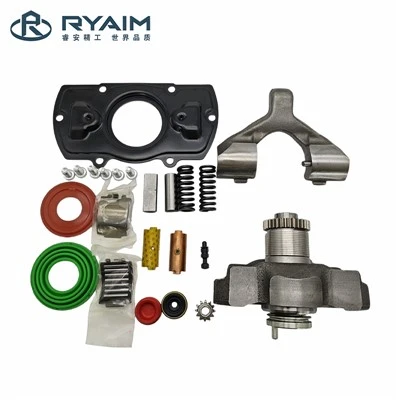
The service life of an automatic slack adjuster is not a fixed, precise duration; rather, it is influenced by a multitude of factors.
In the braking systems of heavy-duty trucks-particularly semi-trailers-the automatic slack adjuster plays a pivotal role. It automatically and promptly adjusts the clearance that increases due to wear, thereby ensuring that the brake clearance remains consistently within the designed operational range, guaranteeing safe and reliable braking performance.
The service life of an automatic slack adjuster is closely tied to its operating environment. If a vehicle frequently operates in conditions characterized by complex road surfaces and frequent braking-such as stop-and-go traffic on urban roads or frequent ascents and descents on mountainous terrain-the slack adjuster is subjected to high operational stress. This accelerates wear, potentially resulting in a relatively shorter service life. Conversely, if the vehicle primarily operates on well-maintained roads with minimal braking demands, the wear on the slack adjuster is reduced, and its service life is likely to be extended.
Manufacturing quality also exerts a significant influence on service life. High-quality automatic slack adjusters are fabricated using premium materials and advanced manufacturing processes; their components feature high precision and exceptional wear resistance, naturally leading to a longer service life. In contrast, products of average quality often suffer from deficiencies in materials and workmanship, making them prone to malfunctions that ultimately curtail their service life.
Routine maintenance and upkeep are equally indispensable. Conducting periodic inspections, cleaning, and lubrication of the automatic slack adjuster allows for the timely detection and resolution of potential issues, thereby effectively extending its service life. For instance, regularly applying lubricant to critical components reduces friction between parts and slows down the rate of wear.
In accordance with relevant national regulations, the use of automatic slack adjusters has been mandatory since October 1, 2004. The adoption of automatic slack adjusters offers numerous advantages for vehicle braking systems and, to a certain extent, helps ensure the optimal operational status of the slack adjusters themselves. They ensure a constant brake clearance at each wheel, resulting in a shorter stroke for the brake cylinder pushrod and enabling rapid, reliable braking. Furthermore, they ensure that the brake cylinder pushrod returns to its initial position prior to braking, thereby guaranteeing consistent and stable braking performance across all wheels.
Simultaneously, this reduces compressed air consumption, extends the service life of related components, minimizes material wastage, and prolongs the operational lifespan of the braking system's parts.
In summary, through measures such as proper usage and diligent maintenance, the automatic slack adjuster can be enabled to perform at its maximum efficiency and achieve its full potential service life.